 CasinOntario
Blackjack Explains Ontario Casino Odds and House Edge
October 20, 2026
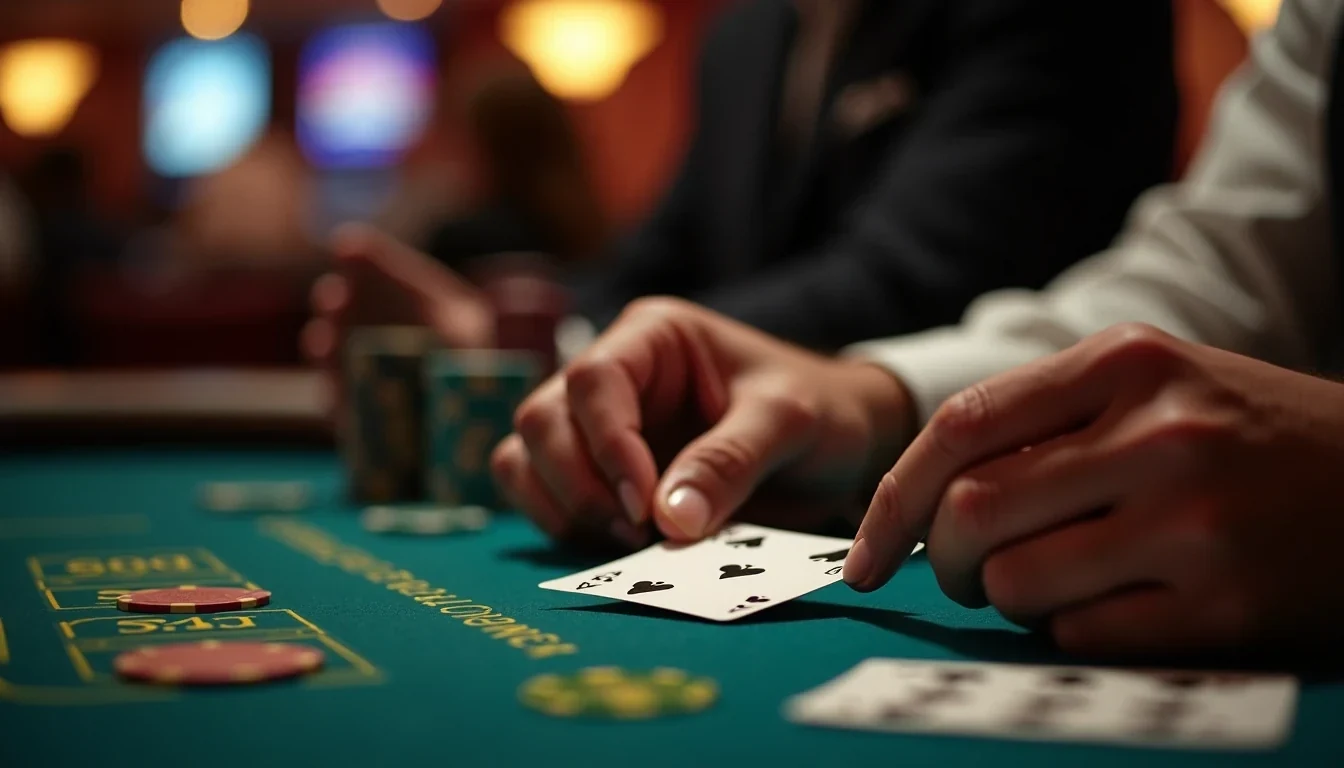
When you walk into Casino Niagara or open any app licensed by iGaming Ontario, the blackjack table looks like the simplest thing in the room: beat the dealer to 21. This apparent simplicity masks the most mathematically transparent game on the floor. It exposes how casinos make money while still letting skilled players shrink the house advantage.
Why Blackjack Reveals the Math
Every other table game buries its mechanics in complexity or speed. Slots hide probability behind animation and sound design. Roulette wheels spin too quickly for most players to track how the zeros tilt the balance. Blackjack moves slowly enough that you can watch the deck deplete, count your outs, and feel the odds shift hand by hand.
The game runs on six to eight standard decks at Ontario venues, from Fallsview Casino Resort to the regulated online platforms. Those 312 or 416 cards create a closed system where every deal changes what remains. Draw two face cards, and the dealer’s chance of busting on a six showing just improved measurably. This finite-card structure makes probability tangible in a way random number generators never quite replicate.
Your decisions matter here. Stand on sixteen against a dealer ten, and you accept a specific loss probability. Hit instead, and you trade one risk for another. Double down on eleven, and you are betting that the remaining deck density favors you enough to justify the extra stake. Each choice carries a calculable expected value. The house finds its edge in the gap between optimal play and gut instinct.
The House Edge Is a Tax on Imperfection
With perfect basic strategy, blackjack carries a house edge of roughly 0.5% at Ontario tables using standard rules. That figure assumes you hit, stand, split, and double according to mathematically optimal decisions derived from millions of simulated hands. Deviate, and the edge climbs. Play by feel, ignore soft seventeen rules, or insure too often, and you might push the casino’s advantage past 2% without noticing.
The dealer’s fixed rules create this structure. Ontario casinos typically require dealers to hit sixteen and stand on seventeen, though some venues and online variants specify hitting soft seventeen. These rules are the mechanical foundation that guarantees the house its long-term margin regardless of how any individual session unfolds.
Slots operate on entirely different mathematics. A typical online slot in the Ontario market might carry a return-to-player rate between 94% and 96%, implying a house edge of 4% to 6%. That edge does not budge based on player decisions because there are none to make. Press spin, accept the programmed outcome. The transparency is different too. A blackjack player can memorize basic strategy and know precisely what disadvantage they face. A slot player sees only the published RTP, with no window into how volatility or hit frequency shapes the experience of that percentage.
Variance and the Lie of a Good Night
House edge describes the long run. Variance describes your actual evening. Blackjack’s variance is relatively low because outcomes cluster near even money. You win a hand, lose a hand, push occasionally. The swings come in manageable increments unless you are splitting pairs or doubling aggressively.
Slots can go fifty spins without a meaningful win, then deliver a payout that covers your session. That high-variance structure means two players with identical budgets and time horizons have radically different experiences. The slot player might bust in twenty minutes or still be playing at dawn. The blackjack player at a ten-dollar table with basic strategy and a five-hundred-dollar bankroll faces a gentler, more predictable erosion.
This distinction affects bankroll exposure. Ontario’s regulated casinos must display responsible gambling resources, including ConnexOntario at 1-866-531-2600. The player who understands variance chooses games that match their risk tolerance and session goals. Someone seeking entertainment duration plays differently than someone chasing a transformative payout.
Comparing Two Ontario Realities
Walk the floor at Caesars Windsor and watch the behavioral divide. Blackjack players lean forward, tracking cards, consulting strategy cards without shame. Slot players settle into rhythm, the machine’s pace dictating theirs. Both are valid approaches, but they are not interchangeable experiences disguised by similar surroundings.
The blackjack player pays for agency. This includes the time investment in learning basic strategy, the mental load of decision-making, and the occasional frustration of making the correct play and still losing because probability is not obligation. The slot player pays for surrender, the relief of not deciding, and the possibility that randomness might align dramatically.
Ontario’s online market makes this comparison immediate. Open BetMGM or DraftKings, and both game types load instantly. The blackjack interface pauses for your call. The slot auto-spins until you intervene. These are structural choices about how much of the gambling experience the player controls.
Where the Money Actually Goes
Bankroll exposure in blackjack is granular and visible. You bet ten dollars, win ten dollars, lose ten dollars, push. The rhythm lets you track exactly where you stand. Slots obscure this through credit systems, bonus rounds, and the psychological distance of digital tokens. A player might cycle hundreds of dollars through a slot while feeling they are only playing with “the machine’s money.”
This opacity serves the house. Ontario’s regulatory framework through AGCO and iGaming Ontario mandates RTP disclosures and fair play certifications, but no regulation can make variance feel real before it arrives. Blackjack’s slower, more legible structure forces confrontation with mathematical reality. You see the deck thin. You remember standing on twelve and watching the dealer pull twenty-one. The cause and effect, however painful, are traceable.
Making the Choice Deliberate
No game in the Ontario market offers advantage play without extraordinary effort. Card counting in multi-deck shoes with continuous shuffle machines is largely obsolete. Basic strategy merely minimizes the house edge; it does not eliminate it. Understanding blackjack’s mathematics is not about finding a secret path to profit. It is about recognizing what you are actually paying for when you sit down.
Slots deliver spectacle and possibility. Blackjack delivers structure and the modest dignity of informed participation. Both extract expected value over time. The difference is whether you experience that extraction as a slow leak you can measure or a sudden flood you did not anticipate.
For players who want to engage with the math rather than delegate it, blackjack remains the clearest lens available in Ontario’s regulated market. Learn basic strategy, respect the fixed rules that govern the dealer, and treat each session as a purchase of entertainment priced by your edge against the house. The numbers do not promise victory. They promise clarity, which in this environment is rarer than any jackpot.
Where to play blackjack in Ontario
BetNova offers multiple blackjack variants through its iGaming Ontario-licensed platform, including standard multi-deck games and live dealer tables with Ontario-specific rules. New players can deposit via Interac and access responsible gambling tools including session limits and self-exclusion. [rel sponsored link]